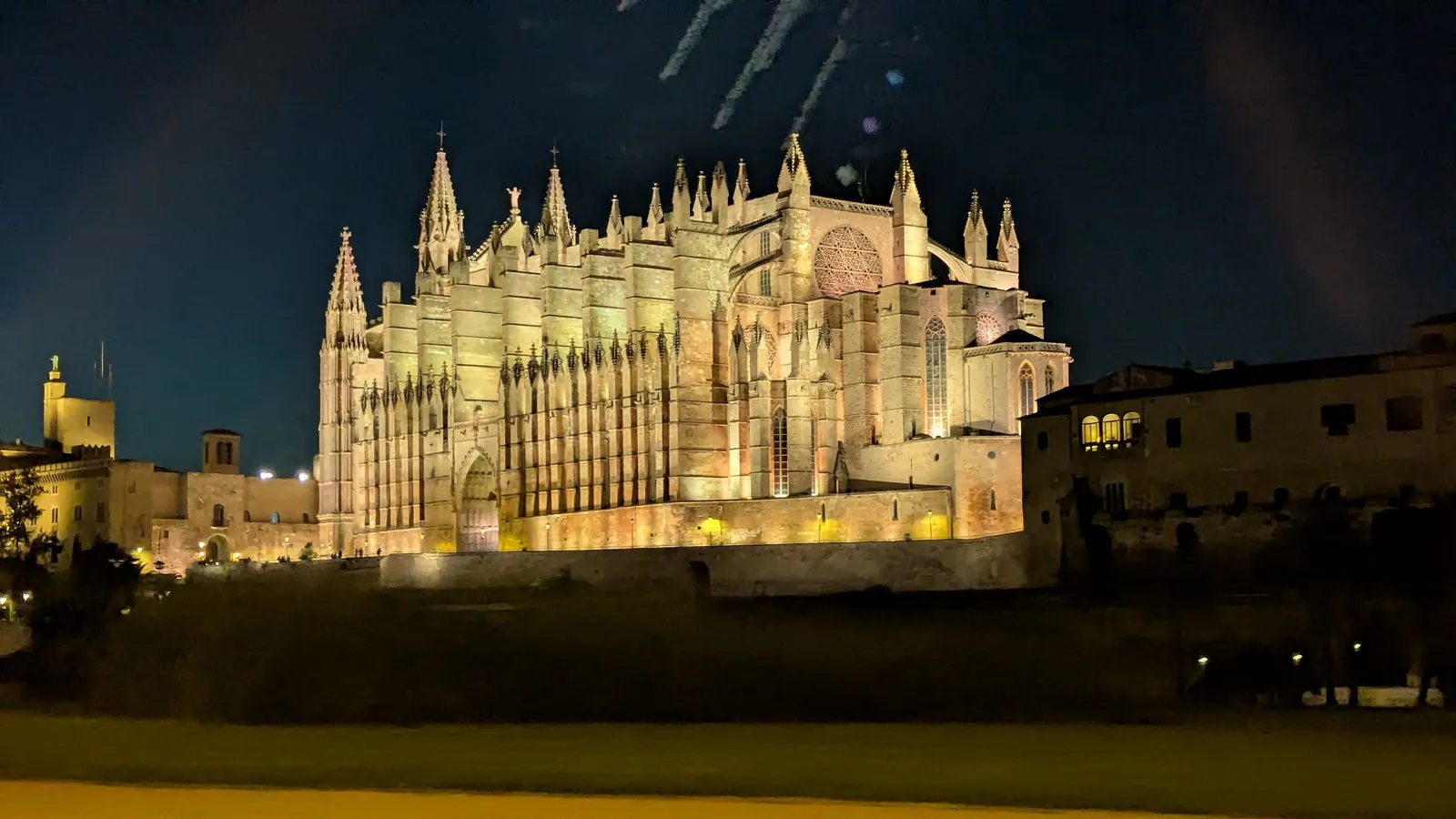
In May, I went to LREC 2026, the 15th Language Resources and Evaluation Conference, held in Palma, Mallorca, Spain from May 11 to 16, with two of my PhD students, Senaid Popovic and Gabriel Loiseau. Both had a paper to present.
Senaid presented DIDECO as a poster at the main conference. It is the first annotated dataset for detecting both explicit and implicit intents in digital communications: what an email asks for, and how it pushes the reader to comply.
🇬🇧 DIDECO: An Annotated Dataset for Intent Detection in Digital Communications. Senaid Popovic, Damien Riquet, Maxime Meyer, Fabien Lauer, Yannick Parmentier. LREC 2026. [link]
Gabriel presented our work on distilling the privacy-assessment abilities of a large language model into small encoder models (about 150M parameters) that stay aligned with human judgments, at the LEGAL / CALD-pseudo workshop co-located with LREC.
🇬🇧 Distilling Human-Aligned Privacy Sensitivity Assessment from Large Language Models. Gabriel Loiseau, Damien Sileo, Damien Riquet, Maxime Meyer, Marc Tommasi. LEGAL / CALD-pseudo 2026. [link]
On a personal note, this was my first academic conference in a long time, and in a different field from the one I did my PhD in. I was struck by how big research has become: the number of people, papers and topics. And from the look of it, it’s only getting bigger by the hour.
Proud of both of them: presenting at a major conference is a milestone, and they did great.